.avif)
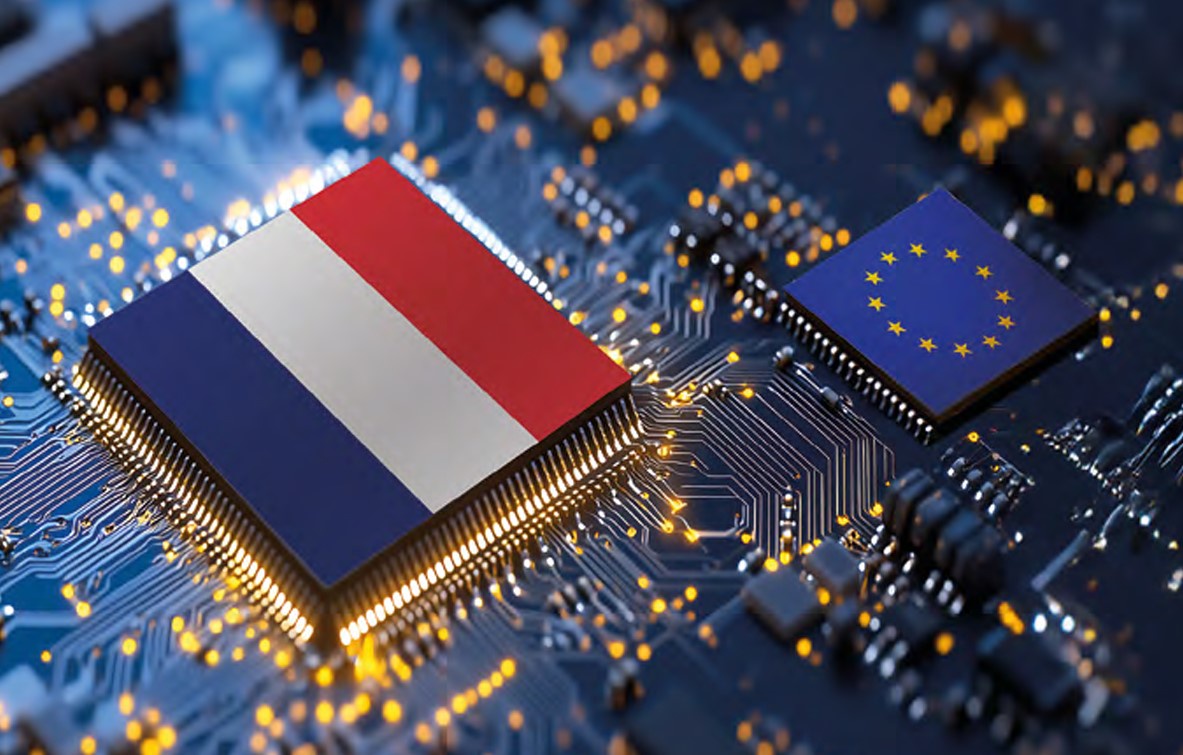
The rapid rise of generative artificial intelligence has pushed the issue of digital sovereignty to the forefront of political and economic agendas. For France, the challenge is no longer just about data storage; it is a battle for control over our technological destiny. As American giants overwhelmingly dominate the global market, the union must organize itself to avoid becoming a digital colony. Data sovereignty is the foundation upon which our strategic autonomy must be built. In this context, AI is not merely a productivity tool but a source of power that we must imperatively control to protect our national and European interests.
The Critical Issue of Digital Sovereignty for France and Europe
Today, France and Europe stand at a crossroads. Digital sovereignty has become the watchword for both government and private sectors that have recognized the fragility of their infrastructures. Technological dependence on foreign actors, mainly the American giants, poses a fundamental problem of security and freedom of choice. If we do not have our own computing and analytical solutions, we effectively delegate our capacity for innovation to third parties whose interests may not necessarily align with ours.
The situation is clear: without complete control over the data lifecycle—from collection to AI processing—France risks falling behind. The massive deployment of AI across all sectors, from healthcare to industry, requires a trusted framework that only a sovereign ecosystem can guarantee. This is a civilizational issue that touches on protecting our values and social model.
Why Digital Sovereignty Has Become a Strategic Imperative
Digital sovereignty was long seen as an abstract or even protectionist concept. It has now become a concrete strategic imperative. This shift is explained by the omnipresence of digital technology in the functioning of the state and businesses. A country’s ability to set its own standards and protect its information is now linked to its technological power. The digital transformation of society demands a reassessment of our relationship with the tools we use daily.
Understanding Digital Sovereignty: Beyond Data Control
Understanding digital sovereignty means recognizing that the concept goes far beyond mere local data storage. Certainly, the physical location of servers on French or European soil is important, but it is not enough. True sovereignty lies in the ability to understand, modify, and audit artificial intelligence algorithms. It implies mastery over both software and hardware layers. It is about ensuring that technology use does not come at the expense of our rights or independence. It is a matter of freedom of action in an increasingly fragmented digital world.
Dependence on AI Giants: Risks and Consequences for France
France’s current dependence on AI solutions developed by Big Tech is worrying. These giants possess computing capacities and research budgets measured in billions of dollars, creating an almost insurmountable barrier to entry for newcomers. This situation leads to a major imbalance where French companies often find themselves captive to closed ecosystems, over which they have neither control of costs nor technical development.
Loss of Control Over Sensitive Data and Intellectual Property
One of the most immediate risks of this dependence is the loss of control over sensitive data. When companies upload their manufacturing secrets or client files into AI models hosted on a non-sovereign cloud, confidentiality becomes a critical issue. The risk of intellectual property leakage to competitors or foreign powers is real. Without adequate protection, our innovations could be siphoned off by the algorithms controlled by those who own the infrastructure, thus weakening our long-term competitiveness.
Vulnerability to Unilateral Changes in Terms of Use
Using the services of large foreign platforms also means accepting a form of contractual vassalage. At any time, a provider can change its prices, restrict access to certain features, or alter its data management policy. This uncertainty poses a major risk to the continuity of French organizations’ operations. The lack of credible alternatives places our decision-makers in a weak position, forcing them to accept conditions sometimes contrary to the national interest.
Increased Risks of Cybersecurity Breaches and Industrial Espionage
The centralization of global data in the hands of a few actors makes these infrastructures prime targets. For France, relying solely on American tools increases exposure to industrial espionage. Extraterritorial laws, such as the U.S. Cloud Act, sometimes allow foreign authorities to access strategic information without data owners being informed. The security of our most critical information is therefore directly threatened by this technological concentration.
Impact on French Competitiveness and Innovation
Finally, dependence hinders local innovation. If our companies only consume pre-packaged AI solutions, they lose the opportunity to develop internal expertise. The risk is for France to become merely a consumption market for technologies produced elsewhere. This directly impacts skilled employment and our ability to nurture digital champions capable of competing globally. The challenge is to retain added value on our territory.
Sovereign Artificial Intelligence: A Lever for Technological Independence
Faced with these threats, the emergence of sovereign AI is no longer optional but essential. AI is considered sovereign when it is developed, trained, and hosted within a legal and technical framework controlled by local actors. It is a powerful tool to ensure that data remains under French and European protection while offering performance comparable to the giants’ tools.
What Is Sovereign AI and Why Is It Essential?
Sovereign AI is defined by the transparency of its models and mastery over its infrastructure. It is essential because it frees us from cultural or political biases often present in models designed in the United States or China. Having AI that reflects our values and respects data protection strengthens our autonomy of judgment. It is the foundation of trusted digital technology, where the user remains master of the tool, not the other way around.
Benefits of Controlled AI for French Companies
For French companies, adopting sovereign AI solutions offers concrete advantages. It guarantees better compliance with GDPR and upcoming European regulations. Furthermore, it fosters the creation of a dynamic local ecosystem where services are personalized and adapted to the specificities of the European market. Mastering AI also allows optimization of industrial processes without the fear of sharing sensitive data with unauthorized third parties, thus strengthening overall competitiveness.
Building Sovereign AI: Technological and Strategic Foundations
Building this independence requires a long-term strategy and massive investments. Being sovereign is not enough; we must equip ourselves with the necessary technical and financial means. This starts from the base of the digital pyramid: hardware and infrastructure.
Importance of Sovereign Cloud Infrastructures and European Data Centers
The cloud is the foundation of all AI. Without storage and computing infrastructures located in Europe, sovereignty is an illusion. It is imperative to support the development of European data centers meeting the highest security standards. These computing centers must be protected from extraterritorial laws to guarantee true data protection. France has the players capable of meeting this challenge, but they need strong political will and exemplary public procurement to reach critical mass.
Key Technologies to Master: From Semiconductors to Generative AI
Sovereignty is also about hardware. Dependence on semiconductors produced mainly in Asia or designed in the United States is a major vulnerability. The European Union must invest billions of euros in this sector to secure supplies. At the same time, mastering generative AI algorithms is crucial. We must be able to build and train our own large language models (LLMs) to avoid dependence on Google or OpenAI APIs. It is a large-scale project requiring the mobilization of all our experts.
Open Source as a Foundation of Independence and Trust
Open source plays a fundamental role in this quest for independence. By using and contributing to open technologies, companies and administrations avoid proprietary lock-in. This enables greater control over code, facilitates security auditing, and encourages collaborative innovation within the union. Open source is the best way to build sovereign and transparent AI solutions capable of competing with the giants’ closed systems.
French and European Initiatives to Strengthen Digital Sovereignty
Fortunately, a reaction is underway. For several years, the European Union has multiplied initiatives to strengthen its stance. This movement is accompanied by a major political awakening, where technology is now seen as a lever of national sovereignty.
The Role of Public Policies and Regulations (GDPR, AI Act)
The legislative framework is one of the pillars of our strategy. GDPR has already set a global standard for personal data protection. Today, the AI Act complements this arsenal by regulating the use of artificial intelligence within the union. These regulations are not brakes on innovation but tools to create a single market based on trust. They require global players to comply with our rules if they want to access the European market, thus asserting our legal sovereignty.
Investing in European Tech Champions and Research
To compete, investment is key. Billions of euros are being injected through plans like France 2030 to support research and development. The goal is to nurture champions capable of leading large-scale global projects. Whether in quantum computing or generative AI, France must capitalize on its talented engineers to convert academic research into economic success. Training is also a key subject to provide the experts necessary for this transformation.
Encouraging the Emergence of Sovereign and Innovative AI Solutions
The state and public services have a catalyst role to play. By favoring sovereign solutions in their own tenders, they provide a crucial market for local companies. Encouraging a dynamic ecosystem of startups and SMEs specialized in AI helps diversify offerings and reduce dependence on foreign tools. It is by creating solid demand for French technologies that we will secure our autonomy.
How Can Companies Ensure Their Digital Sovereignty Against AI Giants?
For companies, action is necessary. It is not about rejecting effective tools outright but adopting an informed risk management approach. Digital sovereignty must be integrated into the overall strategy of every organization.
Assessing Current Technological Dependence
The first step for a company is to conduct an audit of its technological dependence. What digital tools are used? Where is data stored? What would be the consequences of an abrupt service interruption? This awareness is essential to identify strategic vulnerabilities. The goal is to assess not only technical risk but also legal and financial risks related to the use of uncontrolled technologies.
Adopting Sovereign and Ethical AI Solutions
Once the diagnosis is made, it is advisable to turn to sovereign alternatives. Many solutions already exist in France and Europe to meet data processing, predictive analysis, or generative AI needs. Choosing sovereign AI is also choosing ethics and social responsibility. Companies can thus assure their clients and partners that their information is handled according to the highest confidentiality standards.
Securing Data and Intellectual Property
Protecting intangible assets must be a top priority. This requires implementing advanced security protocols, such as data encryption and strict access control. By opting for hosting on a sovereign cloud, companies ensure that their sensitive data is not subject to intrusive foreign laws. This provides sustainability for their competitive advantage in a world where information is the most precious resource.
Conclusion: Towards an Asserted French and European Digital Sovereignty
Digital sovereignty is not a retreat into isolation but an affirmation of our capacity to exist independently in the global digital space. Facing AI giants, France and the European Union possess considerable assets: excellent research, a protective regulatory framework, and innovative companies. However, the window of opportunity is narrow. It is urgent to turn intentions into concrete actions through massive investment and seamless coordination between public and private sectors.
A Collective Challenge for Sustainable Strategic Autonomy
The fight to master AI and data sovereignty is a collective challenge. It concerns the state, companies, but also every citizen concerned about their digital freedom. By choosing sovereign solutions, we build a stronger and more independent Europe. Sustainable strategic autonomy will only be achieved if we manage to build a complete ecosystem, from semiconductors to end-user applications. Only then will we guarantee our economic power and the longevity of our democratic model in facing the challenges of the 21st century. France holds all the cards to lead this fight and become a leader in global technological transformation once again.
Derniers articles